The room waits before it acts.
A person enters a workshop where robotic tools, local agents, and environmental systems are present but quiet. The first impression is not spectacle; it is readiness under restraint.
Scenes
A room where intelligence waits for permission. A person carries authority on a small dedicated device, and nearby machines can help only after limited permission is signed.
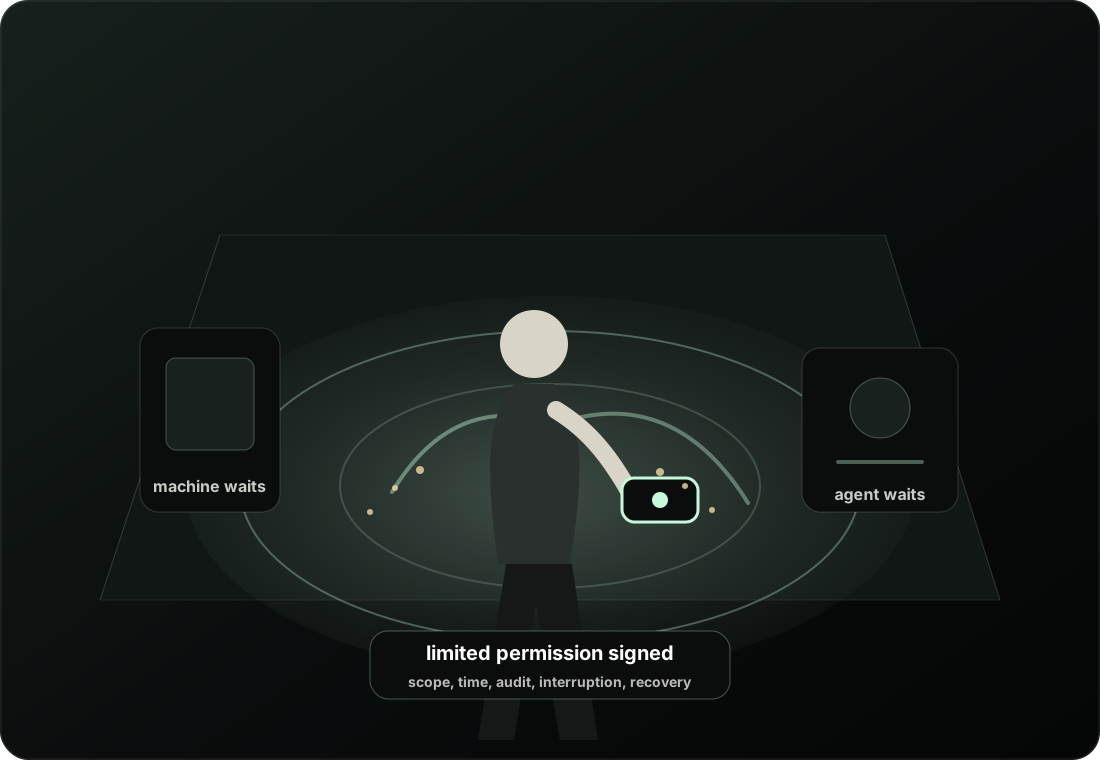
Scene 01
A person enters a workshop where machines, agents, and robots are ready to assist. A small dedicated device signs a limited permission. The surrounding systems can act, but only inside the granted boundary.
The scene is not about robots becoming impressive. It is about authority remaining personal, portable, and recoverable as intelligence spreads into the environment.
The moment
The important action is small: a limited grant of authority. The visible future is not more machines acting everywhere; it is machines waiting until scope, time, audit, interruption, and recovery are clear.
A person enters a workshop where robotic tools, local agents, and environmental systems are present but quiet. The first impression is not spectacle; it is readiness under restraint.
A small trust device, distinct from an ordinary connected device, becomes the visible root of permission. It suggests that personal authority should be portable, deliberate, and recoverable.
The device grants a narrow instruction: what may act, for how long, under which scope, and with what record. The surrounding intelligence receives capability without receiving unlimited control.
Light paths or subtle interface traces show the permission boundary. Machines begin to coordinate, but the visual language should feel like consent and containment, not surveillance.
Only after the scene is understood should the technical language appear: personal HSM, signed intent, scoped delegation, revocation, audit trail, and ambient intelligence control.
What the scene shows
The audience first sees a concrete moment: a person, a device, and intelligent systems waiting for permission.
Robots and agents coordinate only after a signed, limited instruction is granted.
Personal HSM, signed intent, scoped delegation, revocation, and audit trail become the explanation behind the image.
Ambient intelligence becomes safer when human authority does not live only inside an ordinary connected device.
Other futures to make visible
Traceability, telemetry, documents, and operating systems become easier to understand when they are shown through a concrete human moment.
Objects move through production while state, inspection, and approval remain connected enough to reconstruct the story later.
Teams, vehicles, and devices coordinate through signals that reveal movement and condition without overexposing private data.
Policies, records, approvals, and evidence remain close to the decision instead of being scattered across files and messages.
Daily operations, finance, people, and approvals become readable as one operating surface rather than disconnected software islands.